
Car Rental Business Digitization: Why It's Vital to Your Operations in 2026
Updated: Aug 21
Summary: Car rental software centralises reservations, invoicing, and vehicle availability, helping agencies distinguish profitable operations from those losing money to manual, disconnected processes.
Car rental business digitization means moving your reservations, billing, fleet status, and maintenance off spreadsheets and whiteboards and onto one connected system. Done right, it's the difference between an agency that quietly loses money to double-bookings and manual errors and one that runs profitably with real-time control.
Here's what changes when you make the switch, a side-by-side manual-vs-software comparison, and where the industry is heading next.

What is car rental business digitization?
Car rental business digitization is the process of replacing manual, disconnected tools, such as booking spreadsheets, paper contracts, and separate accounting sheets, with a single cloud-based system (often an automotive ERP) that manages reservations, vehicle availability, invoicing, and maintenance in one place.
In practice, it does three things: it removes the manual data entry that causes billing errors, it gives you real-time visibility into where every vehicle is and what it's earning, and it lets customers book online instead of by phone.
The rest of this guide breaks down each of those, then shows the gains in a comparison table.
1. One system instead of scattered paperwork
With a cloud-based automotive ERP, rental agreements, vehicle availability, maintenance records, customer data, and accounting all live in one system. Staff stop sifting through physical files or separate spreadsheets to answer a simple question like "is this car free next Tuesday?"
Everything is one search away, from any device.
2. Automation that cuts billing time and errors
Manual double-keying is where rental businesses lose hours and make costly mistakes, especially on rate calculations and recurring invoices. Automation removes the double entry and standardises the maths.
Fleetnetics ERP users benefit from up to 80% reduced time spent processing recurring rental billing. Digital contracts and invoices can also be shared with customers by email or link instantly, cutting operating costs and speeding up response times.
3. Online booking as your digital front store
Most renters now start on a phone. An online (e-Rental) booking flow acts as your 24/7 front store, and when it's integrated with your back-end ERP, the details customers enter are pulled straight through into rental contracts, with no re-typing by staff.
That frees your team to spend time on customer relationships instead of admin.
Manual vs digitized car rental: a comparison matrix
The clearest way to see the value of car rental business digitization is to put manual management next to a centralized system, task by task.
Operational area | Manual (spreadsheets / whiteboards) | Digitized (car rental software) |
Bookings & availability | Double-bookings from out-of-date sheets; staff phone around to confirm | Real-time availability; conflicts blocked before they happen |
Billing & invoicing | Manual re-keying; rate and invoice errors on sensitive fields | Automated billing - up to 80% less time on recurring billing |
Fleet visibility | No live view; "where is that car?" needs a call | One dashboard showing every vehicle's status and location |
Maintenance | Reactive; breakdowns discovered on the road | Scheduled records and alerts before a vehicle is due |
Customer experience | Phone/paper, office-hours only | Online self-service booking, any time |
Reporting | Hours compiling spreadsheets manually | Live dashboards on utilization and revenue per vehicle |

The pattern is consistent: digitization removes manual handoffs and blind spots. Industry benchmarks put a healthy fleet utilization rate at roughly 70-85%; you can't manage toward that number if you can't see it in real time.
Day in the life: two scenarios
The two examples below are illustrative scenarios, not specific customers, shown to make the difference concrete.
Illustrative scenario A - a small local agency hitting a ceiling
A 12-vehicle agency runs bookings on a shared spreadsheet. As demand grows, two staff accidentally promise the same SUV to two customers on the same weekend, and a recurring corporate invoice goes out with the wrong rate. Neither mistake is laziness, they're what happens when growth outpaces manual tools.
Digitizing bookings and billing removes both failure points: availability updates in real time, and invoices calculate themselves.
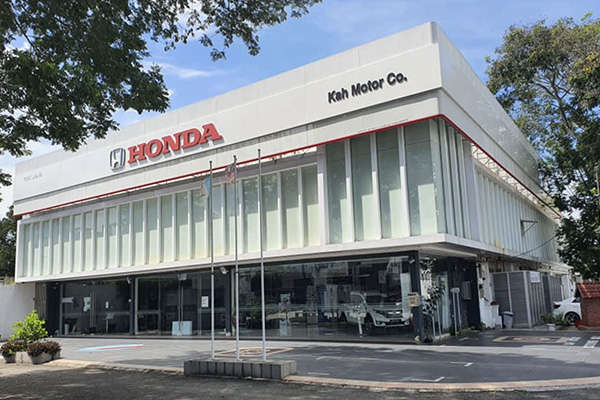
A real example - Kah Motors, a growing auto leasing and Honda cars dealer
Kah Motors runs on the Fleetnetics Rental Management System, which is built specifically for the automotive industry.
According to its case study, the platform's robust infrastructure supported the dealer's growth, with rental agreements created in just three steps, and it points to enhanced efficiency and higher customer satisfaction, backed by constant system updates and responsive support.
It's a concrete picture of what digitizing rental operations looks like once a business scales beyond what manual tools can handle.
The ROI of digitizing your rental operations
The return on car rental business digitization shows up in three places. Where possible, measure your own baseline first, then track the change:
Lower administrative overhead. Removing double entry and manual invoicing is the fastest win. Fleetnetics users see up to 80% less time on recurring rental billing.
Less vehicle downtime. Scheduled maintenance and alerts move you from reactive repairs to planned servicing, keeping more of the fleet available.
Higher fleet utilization. Real-time visibility helps you push utilization toward the 70–85% industry benchmark instead of leaving cars idle on the lot.
What's happening next in car rental technology
Digitization is the baseline; the next wave is about what the data enables. Three shifts worth watching:
Connected, data-driven fleets. As more vehicles report status and usage, decisions about allocation, pricing, and replacement move from gut feel to data.
New vehicle types. Electric and, further out, autonomous vehicles bring different maintenance and tracking needs, which is why rental operators increasingly want one platform that already spans multiple verticals.
Tighter front-to-back integration. The gap between the customer's online booking and the back-office ERP keeps closing, so a reservation becomes a contract, an invoice, and a fleet update in one flow.
For rental operators, the takeaway is simple: get the core digitized now, on a platform that can grow into these shifts, rather than bolting on tools later.
What is Fleetnetics?
Fleetnetics is a cloud-based automotive ERP that digitizes automotive operations, including rental management, workshop, inventory, spare-parts distribution, and fleet maintenance management. It's built to bring the scattered parts of a rental business, bookings, billing, vehicles, and customers, onto one platform.

Fleetnetics implementation can typically be completed in 2 to 3 weeks for smaller project scopes with minimal setup, though timelines vary with requirements. Want to see it on your own fleet? Request a free demo, or read more about rental features.
Frequently Asked Questions
How does a cloud-based automotive ERP reduce paperwork for car rental businesses?
A cloud-based ERP consolidates rental agreements, vehicle availability, maintenance records, customer data, and accounting into one system — letting employees access and work on all documents without sifting through physical files or separate spreadsheets.
How much time can automotive ERP automation save on rental billing?
Fleetnetics users benefit from up to 80% reduced time spent processing recurring rental billing, since ERP automation cuts down on double key data entry and minimises errors on sensitive information like rate calculations and invoices.
How does online booking integration improve car rental operations?
A front-end booking plugin lets customers fill in their own rental details, which are instantly retrieved and converted into rental contracts — reducing manual data entry for staff and freeing them to focus more on customer relationship building.
How long does it take to implement Fleetnetics?
Fleetnetics software implementation can typically be completed in 2 to 3 weeks for smaller project scopes with minimal setup, though timelines may vary depending on further requirement study for larger or more complex deployments.
Read more:
*For smaller project scope with minimal setup and subject to further requirement study.


