
Have You Switched to Integrated Automotive ERP Yet?
- May 29
- 8 min read
Updated: Jul 6
Summary: An integrated automotive ERP connects rental, workshop, inventory, customer, and financial operations in one system, replacing the disconnected tools that leave rental businesses with data gaps and manual handoffs.
Car rental business owners in Singapore face increasing pressure to optimise operations with limited resources. The technology choices they make now will determine their future competitive edge.
A rental ERP system is no longer just for large fleet operators; it's becoming essential for distinguishing profitable agencies from those losing money due to inefficiency.

The main issue is clear: most businesses use disconnected tools that don't integrate.
Car reservation platforms don't communicate with workshop management software. Finance systems lack real-time fleet availability data. Maintenance records are in spreadsheets, while unsuitable vehicles are allocated for hires. This leads to a reactive business approach with high costs.
This article explores why integrated automotive ERP systems are becoming standard for car rental agencies, the efficiency gains they offer, and how to choose the best ERP software for rental industry. Whether managing a single-site fleet or coordinating multiple locations, integration is crucial, and the cost of inaction is increasing.
Why Integrated Automotive ERP Vital for Rental & Workshop Management
Disconnected rental systems are quietly costing fleet directors revenue, accuracy, and control — and the pressure is mounting to act.
The automotive industry is undergoing a fundamental shift. Consumers and businesses are moving away from vehicle ownership towards flexible access models, and this transition demands far more sophisticated operations.
As PwC notes, "the shift from vehicle ownership to 'usership' requires rental providers to adopt robust digital backbones that can handle complex billing, real-time tracking, and predictive maintenance." Most legacy rental fleet management software simply wasn't built for this complexity.
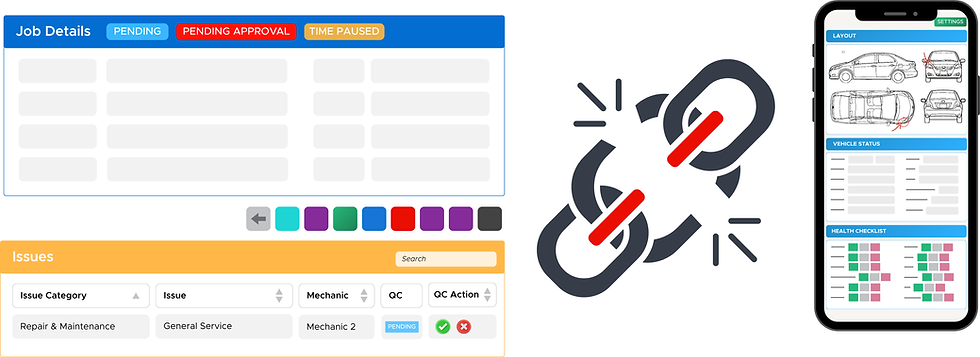
Fragmentation is the core problem. When the rental desk, service bay, and finance function each operate on separate platforms, critical data gaps emerge.
A vehicle marked as available in the booking system may already be scheduled for maintenance — a disconnect that leads directly to double-bookings, dissatisfied customers, and lost revenue.
Manual data entry compounds the issue further. Reconciling availability, servicing records, and billing across siloed tools introduces human error at every handoff.

Inventory inaccuracies accumulate, making it increasingly difficult to maintain a reliable view of your fleet at any given moment.
The question for modern fleet directors isn't whether fragmentation is causing inefficiencies — it's how significant those inefficiencies have become, and what integrated technology can do to address these painpoints, making the best ERP software for rental industry.
Efficiency Gain: The Case for a Rental ERP System
Integrated ERP systems aren't just an operational upgrade — they're fast becoming the competitive baseline for car rental agencies that want to stay profitable.
As outlined in the previous section, fragmented systems create cascading inefficiencies. The data backs this up decisively:
Recent studies by Deloitte show,
Poor maintenance strategies can reduce an asset’s overall productive capacity by 5% to 20%.
And a published article from IndustryWeek, along with Emerson stated,

Recent studies also show that unplanned downtime is costing industries an estimated $50 billion each year
For Singapore's rental market — where fleet turnover is high and customer expectations are demanding — these figures carry real weight. When car rental reservation software operates independently from maintenance, billing, and fleet tracking, inventory accuracy suffers. An unserviceable vehicle that's still showing as "available" isn't just an inconvenience; it's direct revenue loss.
In practice, a unified ERP eliminates these blind spots. Administrative workflows that once required manual reconciliation across multiple platforms consolidate into a single source of truth. You can explore how an integrated automotive ERP addresses these gaps end to end.
However, efficiency gains on the administrative side are only part of the picture. The workshop floor represents another significant source of hidden cost — and that's precisely where the next piece of the puzzle fits.
Closing the Gap Between Rental Desk and Workshop

A rental fleet management software that connects workshop operations to the rental desk eliminates the single biggest cause of unplanned vehicle downtime: information arriving too late.
In practice, disconnected teams mean a car returns from a hire with a service due in 200 miles — and nobody at the workshop knows until it's already been allocated to the next booking. When evaluating the best ERP software for rental industry operations, this real-time visibility between the workshop and the rental desk is one of the most critical capabilities to assess. Integrated systems solve this by acting on live data the moment it matters.
Automated maintenance alerts — Real-time mileage data triggers service reminders automatically, so workshop staff are notified before a vehicle becomes a liability rather than after.
Return-to-service scheduling — Linking return inspections directly to service calendars means technicians can pre-stage parts and labour, slashing turnaround time between hires. You can see how smarter parts workflows support this kind of proactive scheduling in practice.
Predictive maintenance data — According to Deloitte's automotive sector analysis, integrated ERP systems that combine workshop management with rental modules reduce vehicle downtime by automating alerts based on real-time mileage.
The result is more vehicles on the road, more of the time — which is the clearest possible measure of fleet efficiency. With the operational case established, the question becomes which ERP solution is actually built for the rental industry.
What are the Top 3 ERP Systems for the Rental Industry?
Identifying the best ERP software for rental industry needs means understanding that not all platforms are built with the same operator in mind.
Global Tier-1 ERPs: Designed for large multinationals managing complex, cross-border operations. They offer broad enterprise coverage, and these systems typically require heavy customisation to support specific automotive rental workflows, adding considerable cost and implementation time.
Generic Rental Software: Equipment or car rental reservation software built for small-scale hire, focuses on booking management and basic inventory tracking. They're accessible and affordable, but lack the depth needed for fleet maintenance, workshop job scheduling, or driver management.
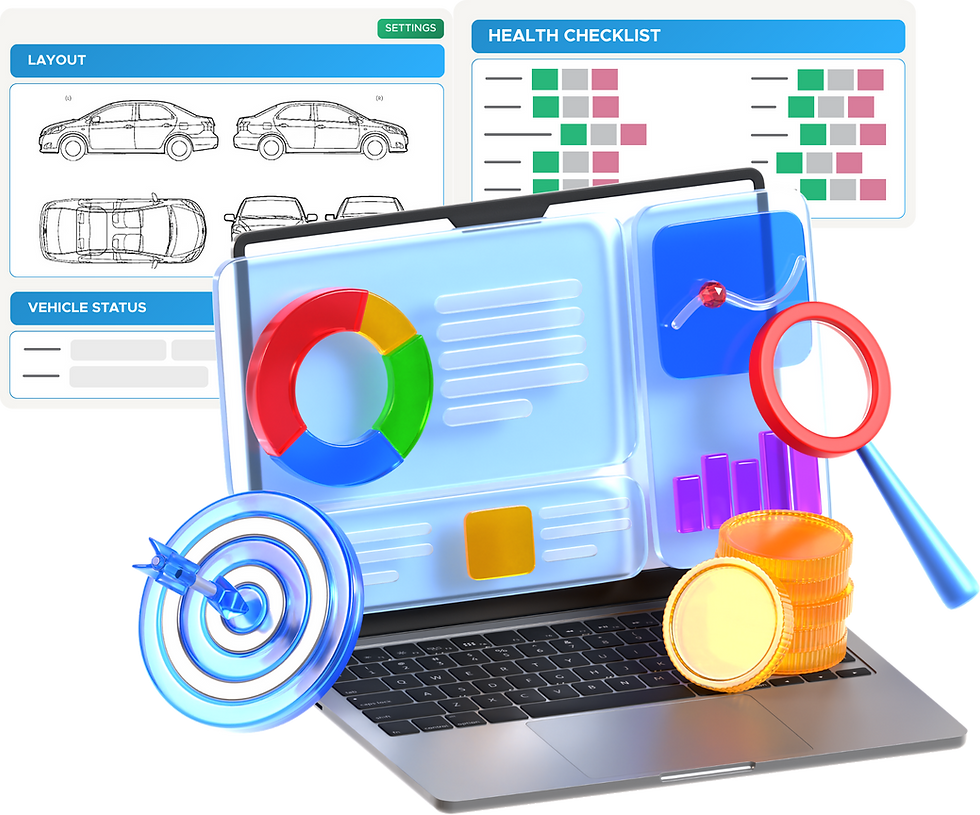
Specialised Integrated Automotive ERP (Fleetnetics): Purpose-built for integrated fleet and workshop operations, a dedicated integrated automotive ERP connects the rental desk, service bay, and finance function without requiring costly third-party add-ons. Unlike adapted generic tools,0 these platforms are designed from the ground up around the operational realities of vehicle rental.
Specialised beats generic whenever your operation depends on vehicle availability, maintenance compliance, and real-time fleet visibility working in sync.
In practice, agencies using a specialised platform — one that handles everything from workshop appointment scheduling to vehicle condition tracking — recover operational efficiency far faster than those adapting a generic system after the fact.
Of course, the right choice also depends on your local operating environment — which is precisely where factors like regional compliance and local support become critical considerations.
Selecting the Best ERP: Reliability and Compliance in Singapore
Choosing an integrated automotive ERP isn't just about features — local compliance, regional support, and cloud accessibility are equally decisive factors for Singapore-based rental agencies.
Reliability hinges on four core factors:
LTA and tax compliance. Singapore's Land Transport Authority requirements and GST obligations demand that your ERP handles local regulatory frameworks natively — not through workarounds. Confirm the platform supports LTA reporting and automated tax calculations before committing.
Cloud-based multi-location access. Cloud ERPs allow real-time tracking of vehicle availability across multiple locations, directly reducing the risk of double-bookings. For agencies operating across several sites, this isn't optional — it's foundational.
Uptime and data integrity. A platform is only as reliable as its uptime record. Evaluate SLA guarantees and ask vendors directly about historical downtime. A rental fleet management software that goes offline during peak booking periods creates exactly the operational chaos it was designed to prevent.
Integrated data flow. Siloed systems — where workshop data and rental desk records don't communicate — reintroduce the inefficiencies you're trying to eliminate. Look for platforms built around unified rental, auto spare parts, and workshop management operations from the ground up.
Evaluate these factors carefully, as they directly shape the measurable outcomes that vehicle rental companies care about most — which the final section addresses head-on.
The Bottom Line: Key Takeaways for Fleet Operations
Integrated automotive ERP systems aren't just a technology upgrade — they're a structural shift in how rental businesses eliminate waste, reduce downtime, and scale with confidence.
The evidence across the industry is consistent: operators who unify their rental and workshop management under a single platform gain measurable advantages over those still managing disconnected systems. Fragmented workflows create blind spots, and those blind spots cost money.
Here's what the research and industry practice confirm:
Integrated ERPs eliminate data silos — when workshop and rental ERP system modules share a single source of truth, scheduling conflicts and missed services become far less likely, and your car rental reservation software can finally operate from accurate, real-time data.
Digital transformation drives significant efficiency gains — operations adopting integrated automotive ERP systems report operational efficiency improvements of up to 80%, a figure that reflects faster turnarounds and fewer manual errors.
Administrative costs drop with specialised software — the best ERP software for rental industry operations reduces admin overhead by approximately 22% compared to manual or generalised systems, freeing your team to focus on customer-facing work rather than reconciling disconnected records.
Real-time mileage tracking is non-negotiable — without it, preventive maintenance intervals slip, vehicles stay off-road longer than necessary, and compliance documentation becomes harder to manage reliably.
In practice, the operators seeing the strongest returns aren't simply adopting ERP — they're choosing platforms built specifically for their industry context. That distinction matters, and it points directly to what the right solution looks like for Singapore-based fleet businesses.
Future-Proofing Your Rental Fleet Management Software with Fleetnetics
For car rental companies operating in Singapore, a generic ERP software won't cut it — local compliance requirements, GST reporting, and regional workflows demand a purpose-built solution.
Fleetnetics is an all-in-one automotive ERP built specifically for the Singaporean market, addressing the compliance and operational demands that generic platforms routinely overlook. Rather than bolting together separate tools, Fleetnetics integrates workshop and rental modules natively — meaning job cards, vehicle availability, maintenance scheduling, and customer invoicing all operate within a single connected system. There's no data migration between platforms, no reconciliation delays, and no compliance gaps.
In practice, this native integration is where the real efficiency gains emerge. Workshop updates flow directly into rental availability, service costs post automatically against the correct asset, and vehicle documentation and compliance tracking remain centralised across every department. The result is the kind of operational clarity that reduces downtime and supports confident decision-making at scale.
Fleet operators looking to eliminate waste and build a more resilient business can see this integrated workflow firsthand.
What else do you think makes up an automotive ERP the best ERP software for the rental industry? Share it with us!
Request a Fleetnetics demo today to explore how the all-in-one platform can be configured to your fleet's specific operational and compliance requirements — and take the first step towards a more connected, future-ready rental operation.
FAQs about Automative ERP
What is an integrated automotive ERP system?
An integrated automotive ERP is software that connects the rental desk, workshop, finance, and inventory functions into one system, so vehicle availability, maintenance records, and billing update in real time across every department — eliminating the data gaps that disconnected tools create.
Why do car rental businesses in Singapore need an integrated ERP?
Singapore's rental agencies face high fleet turnover and strict LTA and GST compliance requirements. An integrated ERP handles local regulatory reporting natively, enables real-time visibility across multiple locations, and prevents double-bookings caused by vehicles wrongly marked "available."
How does an integrated ERP reduce vehicle downtime?
It links real-time mileage data to automated maintenance alerts and return-to-service scheduling, so technicians are notified before a vehicle becomes unavailable rather than after. This closes the gap between the workshop and rental desk that causes unplanned downtime.
What's the difference between generic rental software and a specialised automotive ERP?
Generic rental software handles bookings and basic inventory but lacks depth for maintenance scheduling or driver management. A specialised automotive ERP like Fleetnetics is purpose-built to connect the rental desk, service bay, and finance function without costly third-party add-ons.
Read more:

